Word Frequency List 60000 Englishxlsx Exclusive
The jump from 10k to 60k is where you move from "fluent" to "educated native speaker." 100k lists are bloated; 60k is the sweet spot.
Creating a useful essay based on a "word frequency list 60000 English.xlsx" requires understanding what such a list entails and how it can be applied in various contexts. A word frequency list is essentially a catalog of words ranked by their frequency of use in a language or corpus of text. For English, such lists are invaluable for linguistic research, language learning, and natural language processing (NLP) applications.
Did you know you can write an Excel macro to remove every word you already know? Run your known vocabulary list against the master list. The remaining cells are your "Personal Gap List."
The Excel (.xlsx) format is ideal because it allows for powerful filtering, sorting, and analysis. While the exact columns can vary by source, an exclusive 60,000-word list derived from COCA typically includes the fields listed in Table 2. word frequency list 60000 englishxlsx exclusive
If you do find an XLSX file, ensure it isn't macro-enabled (XLSM) unless you trust the source. Malicious actors sometimes hide payloads inside large Excel files.
The compilation of dictionaries benefits from word frequency lists, as they indicate which words are most in use and thus potentially of greater interest to dictionary users.
This public link is valid for 7 days and shares a thread, including any personal information you added. This link or copies made by others cannot be deleted. If you share with third parties, their policies apply. Can’t copy the link right now. Try again later. The jump from 10k to 60k is where
The Word Frequency Data site provides professional-grade datasets based on over 1 billion words from various genres (spoken, fiction, academic, etc.). Available directly as an Excel (.xlsx) file.
Rows are sorted by Rank ascending.
Given the "exclusive" keyword, you are likely looking for a proprietary or meticulously compiled version. Public academic repositories (like MSU or BYU) offer COCA lists, but they are usually text files requiring assembly. Exclusive versions are often sold by language hacking communities or independent corpus linguists on platforms like Gumroad or Etsy. For English, such lists are invaluable for linguistic
| Rank | Word | POS | Frequency (per billion) | Dispersion | | :--- | :--- | :--- | :--- | :--- | | | The | Det | 62,000,000 | 1.00 | | 30,000 | Persimmon | Noun | 1,200 | 0.72 | | 60,000 | O tempora o mores | Interjection | 2 | 0.01 |
Create targeted study guides for advanced fluency.
CONTACT
INFO
Source Code
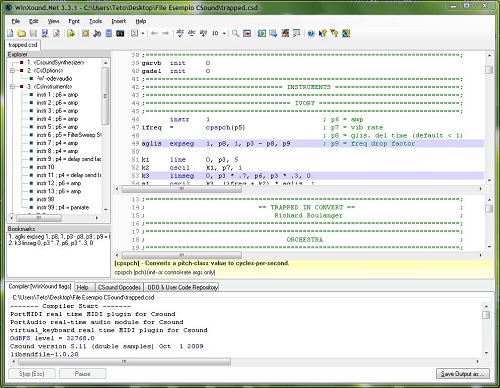
- Windows: The source code is written in C# using Microsoft Visual Studio C# Express Edition 2008
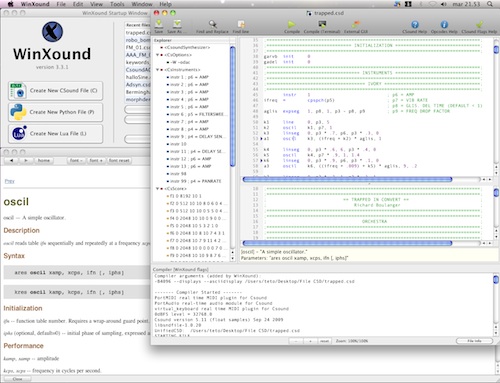
- OsX: The source code is written in Cocoa and Objective-C using XCode 3.2 version
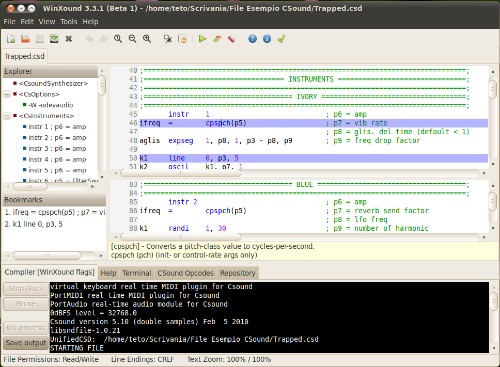
- Linux: The source code is written in C++ (Gtkmm) using Anjuta
For the OsX-Cocoa version of WinXound special thanks go to Giuseppe Silvi for the debugging help and other useful suggestions.
The TextEditor is entirely based on the wonderful SCINTILLA text control by Neil Hodgson (http://www.scintilla.org).
Credits
Many thanks for suggestions and debugging help to Roberto Doati, Gabriel Maldonado, Mark Jamerson, Andreas Bergsland, Oeyvind Brandtsegg, Francesco Biasiol, Giorgio Klauer, Paolo Girol, Francesco Porta, Eric Dexter, Menno Knevel, Joseph Alford, Panos Katergiathis, James Mobberley, Fabio Macelloni, Giuseppe Silvi, Maurizio Goina, Andrés Cabrera, Peiman Khosravi, Rory Walsh, Luis Jure and Giovanni Doro.