Please use croppola on your laptop or desktop computer.
Croppola crops your photos intelligently.
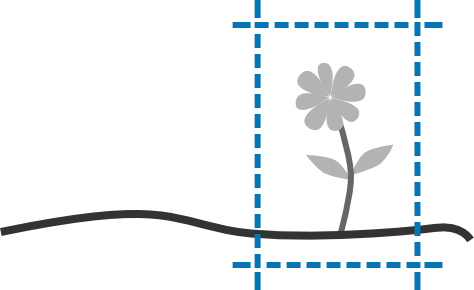
Croppola analyzes the composition of your picture and calculates the best crop. Just drop a photo, select the desired aspect ratio, and watch croppola do its magic!
Change the aspect ratio of a photo
You have a portrait photo, and want a nice 4:3 landscape crop for your latest presentation slides. Croppola will find a well-balanced part with the desired aspect ratio within your picture - quickly and painlessly.

Enhance your holiday pictures or snapshots
You took snapshots of your kids playing on the beach, and want to improve the framing. Croppola will analyze your photos and suggest well-balanced crops.

Prepare photos for your photobook, calendar, or wallpaper
You are creating a calendar. Let croppola choose a nice crop for you.

Experiment with image composition
You took a great shot and are looking for a perfectly balanced composition. Let croppola make suggestions, and fine-tune manually.

Your smartphone screen is too small for croppola. Please try croppola on your laptop or desktop computer!
V8: Flowcode
The platform includes an intuitive setup interface for Handling Interrupt Service Routines (ISRs). Users can select hardware interrupts—such as Timer overflows, Pin State Changes (IOC), or incoming UART data buffers—and link them to a custom flowchart macro. Flowcode automatically manages the complex register flags and context-saving steps required by the compiler. 5. Comparison: Flowcode V8 vs. Text-Based IDEs
Matrix TSL has hinted at Flowcode v9 (likely 2026), focusing on . Imagine typing "I want a PID controller for a DC motor" into a prompt, and Flowcode generates the flowchart and tunes the coefficients automatically. Also expected: Web-based Flowcode (a la Wokwi or Tinkercad) for Chromebooks.
: The software automatically changes your flowchart into clean C-code [1]. Why Choose Flowcode v8? flowcode v8
Features a drag-and-drop library for various sensors, displays, and communication protocols (like Modbus, CAN, and TCP/IP).
the play button to watch data flow through your chart step-by-step. The platform includes an intuitive setup interface for
LEDs, multi-segment displays, LCDs (character and graphical), and PWM-driven indicators.
In Flowcode v8, Matrix introduced SCADA functionality. By the time of v9, this was renamed to “App Developer” because the old name did not adequately explain its full potential. Imagine typing "I want a PID controller for
Extensive support for 8-bit (PIC12, PIC16, PIC18), 16-bit (dsPIC, PIC24), and 32-bit (PIC32) microcontrollers.